

A Guide to Launching Your Pet Boarding and Daycare Business
Source: Bernie the Boxer
For new pet care entrepreneurs and local service-minded business owners, the pull is easy to spot: neighbors need reliable help when workdays run long, travel pops up, or dogs simply need structured play. Those local pet daycare opportunities can look like a straight shot from “people are asking” to “open the doors,” but the real work starts in the gap between demand and a safe, consistent service. Pet boarding business challenges like trust, safety, staffing, and routines show up fast, and startup pet care issues like space, rules, and expectations can turn a good idea into a stressful scramble. The goal is a plan that matches community pet services demand with a daycare that runs smoothly.
From Idea to Open Doors: Your Pet Daycare Setup Plan
This simple start-to-open sequence helps you turn a pet daycare idea into a real, safe service you can confidently launch. For most people, it prevents costly missteps by forcing the basics, demand, rules, space, and money, to line up before you commit.
Validate demand with quick market research: Start by listing competing daycares, boarding options, and pet sitters, then note their prices, hours, capacity, and reviews to spot gaps you can fill. Talk to local vets, groomers, and dog owners about what they struggle to find (late pickup, small-dog groups, puppy care, weekend availability). The growing category helps, but your goal is proof that your neighborhood will choose you, not just that the industry is big like the pet boarding services market.
Write a simple business plan you can actually use: Choose your exact services (daycare only, add-on boarding, training play sessions) and define your ideal customer, like busy commuters or frequent travelers. Map your daily flow from drop-off to cleaning to pickups so safety and routines are designed in, not improvised later. Add a one-page pricing sheet so you can compare what you need to earn versus what your market will realistically pay.
Confirm licensing, insurance, and policies before you sign anything: Call your city or county to ask what rules apply to animal care facilities, including zoning, occupancy limits, noise, and required inspections. Get insurance quotes early and write plain-language policies for vaccinations, temperament screening, emergency contacts, and what happens if a dog gets sick. This step protects trust and keeps you from building a business in a space you cannot legally operate.
Set up a safe facility and a repeatable routine: Choose a location and layout that separates play groups, quiet areas, feeding, and cleaning, then pick surfaces and equipment that are easy to sanitize. Create a staffing plan that matches your busiest hours, including a backup plan for call-outs. Run a “test day” with a small group of dogs to stress-test noise, transitions, cleaning time, and supervision.
Build a startup budget and a break-even target List one-time costs (lease deposit, fencing, kennels, software, signage) and monthly costs (rent, payroll, insurance, supplies, utilities), then add a cushion for surprises. Set a break-even number by estimating how many dogs per day you need at your average price to cover monthly expenses. Use the big-picture spending trend as motivation, since Americans spent over $150 billion on their pets, but let your local math decide your launch timing.
Build the Business Skills That Make Pet Care Profitable
Once your plan is on paper and your space is coming together, the next big win is feeling just as confident running the business side as you do caring for pets. If you’ve learned by doing so far, going back to school for a business degree can be a practical way to sharpen the skills that keep a pet daycare profitable, especially marketing and the day-to-day decisions that affect growth. A master’s in business administration equips you with skills in leadership, strategic planning, financial management, and data-driven decision-making to excel in diverse business environments. If you want a flexible option that fits around real-world responsibilities, a master of business administration online can make it easier to keep running your daycare while you’re in school.
Drop-Off to Pick-Up: A Daily Flow You Can Repeat
A smooth day isn’t about doing more, it’s about doing the right things in the same order. This simple rhythm helps you stay consistent with daily pet care routines, staff scheduling for pet daycare, and pet safety protocols, even when the playroom is full.
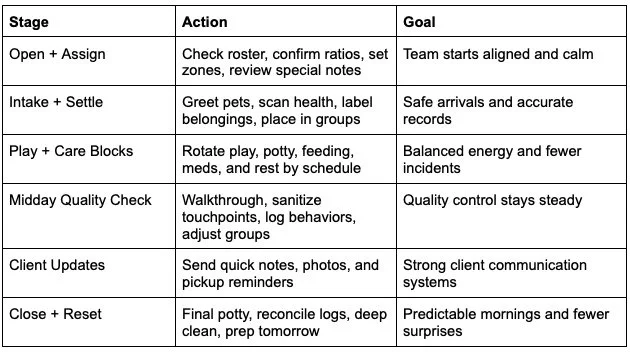
When each stage has a clear purpose, your staff can move confidently without guessing what comes next. The notes you capture at intake and midday checks also make the next day easier, creating a loop of small improvements.
Pet Daycare Startup Questions People Ask Most
Q: What zoning rules usually apply to a pet daycare?
A: Start with your city or county planning office and ask how your address is zoned and whether “kennel” or “animal daycare” is allowed. Also confirm noise, parking, hours, and waste disposal rules, since those are common deal-breakers. Get answers in writing before you sign anything.
Q: How do I protect myself if a dog gets injured or bites?
A: Use a clear waiver, require vaccines, and document behavior notes at drop-off and during the day. Separating dogs by size, play style, and energy level reduces incidents and shows you take safety seriously. Talk to an attorney about state-specific language for your contract.
Q: What insurance should I price out first?
A: Ask brokers for a package that includes general liability, care-custody-and-control, and workers’ comp if you hire staff. A growing pet liability insurance market reflects how common it is to insure pet-related risk. Request quotes with the same limits so you can compare fairly.
Q: How can I build customer trust before I have lots of reviews?
A: Offer tours, share daily report cards, and post your cleaning and supervision standards where clients can see them. Keep policies simple and consistent, then follow them every day.
Q: When should I hire staff instead of doing it all myself?
A: Hire when safety ratios or coverage gaps start forcing shortcuts. A part-time helper during peak drop-off and pickup hours is often the safest first step.
Build a Pet Daycare That Grows Through Simple, Steady Steps
Starting a pet daycare can feel like a tug-of-war between big dreams and real-world worries like zoning, liability, and earning trust. The simplest path forward is the one this guide keeps pointing to: stay clear on your plan, start lean, and let community networking do its quiet work while you learn. When entrepreneurial motivation is paired with a steady, practical mindset, starting a small business stops feeling like a leap and starts feeling like progress. Pick one next step, do it this week, and let momentum handle the rest.