How to Set Up Stress-Free In-Home Pet Sitting Before Your Trip
Source: Bernie the Boxer
For pet owners traveling for work, family visits, or long‑planned vacations, in‑home pet sitting can sound simple until the details start piling up. The core tension is leaving beloved pets in a live‑in home while juggling schedules, routines, and small pet care challenges that can quickly turn into last‑minute panic. Without preparing for a pet sitter, even well‑meaning help can miss key expectations, because pet sitter responsibilities often include more than food and potty breaks. A clear setup keeps pets comfortable, the home running smoothly, and travel days calmer.
Set Up In-Home Pet Sitting in 5 Simple Steps
This process helps you choose a reliable in-home pet sitter and set them up for success with your home and your pet’s routine. For most people, a few simple prep steps prevent avoidable mix-ups, reduce stress while you’re away, and keep pets calm.
Find a short list of sitter candidates: Start with trusted referrals from friends, neighbors, your vet, or local community groups, then add one or two professional options for backup. Look for sitters whose availability matches your dates and who have experience with your pet type and energy level.
Vet the sitter with a quick interview and trial: Ask scenario questions like “What would you do if my pet won’t eat?” and “How do you handle an escape attempt?” Then schedule a paid meet-and-greet or short trial visit so you can see how they follow directions and how your pet responds.
Prepare your home for safe, easy care: Do a fast safety sweep so the sitter can focus on care, not surprises. Pet-proof your house as your baseline by securing fences, locking up toxins and cleaners, and removing small choking hazards.
Write clear, practical pet care instructions: Create a one-page routine that covers feeding amounts, walk times, meds, quirks, and what “normal” looks like for your pet. A simple list of things to provide keeps you from forgetting essentials like vet info, supplies location, and house rules.
Do a calm handoff and confirm access: Walk the sitter through your home setup, show where supplies live, and demonstrate key tasks like harnessing or pill-giving. Confirm entry details up front by sharing the alarm code and key and the door you want them to use, then do a quick goodbye routine your pet already knows.
Build a Shareable “Sitter Packet” You Can Update Anytime
Once you’ve walked through the core setup steps, make your instructions easy to find and hard to misread by digitizing them in one place. Scan or photograph key pet documents and household info, especially emergency contacts and clear routine guidelines, so your sitter can pull them up quickly on any device. Saving everything as PDFs keeps the packet consistent and readable, so formatting doesn’t shift between phones, tablets, and computers. If you need to tweak a detail before you leave, there are online tools that let you convert, compress, and edit PDFs online.
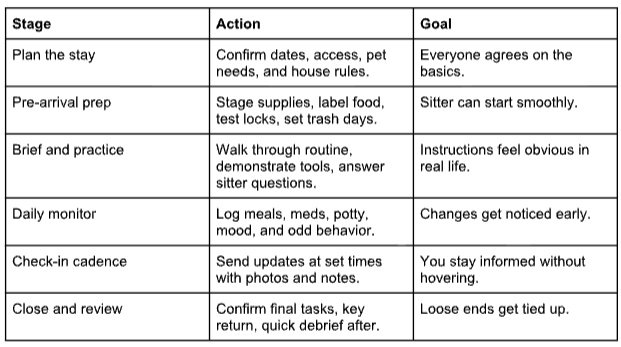
Plan → Brief → Monitor → Check In → Close the Loop
This simple pet sitting timeline turns your prep into a steady rhythm you can repeat for every trip. It reduces missed details, keeps communication predictable, and helps you catch small issues before they become emergencies.
These stages work best as a loop: you plan once, then refine based on what you learned. A daily note that flags behavior concerns also makes your check-ins clearer and your next briefing shorter. Pick your first stage today and let the rhythm carry the rest.
Pet Sitting Questions That Come Up Every Time
Q: How can I feel confident I can trust an in-home pet sitter?
A: Start with a meet-and-greet and ask scenario questions, like what they do if your pet won’t eat or slips out a door. Request two recent references and confirm their comfort with your pet’s specific needs. If they hold credentials, a certification is awarded by a professional organization and involves demonstrating competency, which can add peace of mind.
Q: What should I do to protect my home without making it awkward?
A: Keep it simple: change door codes if you can, store valuables out of sight, and limit access to
only what’s needed. Walk through lock-up steps and ask the sitter to confirm doors are secured
each evening since many people leave doors unlocked at least some of the time. A short “end-
of-day checklist” on the counter makes this feel routine, not suspicious.
Q: How should we handle pet emergencies if I’m unreachable?
A: Put a signed vet authorization and a spending limit in writing, plus your vet’s number and the closest emergency clinic. Share where the carrier, leash, and payment method are stored so time is not wasted. Ask the sitter to contact the vet first for guidance, then update you.
Q: What if the sitter stops responding or service gets spotty?
A: Agree on a check-in window and a backup method like a phone call or a note left at home. Choose a local emergency contact who can physically check in if messages fail. If an update is missed, the sitter should confirm the pet is safe before trying to troubleshoot tech.
Q: When should I schedule a trial run, and what should it include?
A: A trial overnight or two short visits a week before travel is ideal. Have the sitter do the full routine: feeding, meds, walk route, and lock-up. Then adjust your instructions based on what felt unclear in real time.
Plan Ahead for Calm, Confident In-Home Pet Sitting
Leaving pets at home can feel stressful because comfort, safety, and communication all have to hold up while you’re away. A calm approach, proactive pet care planning and clear expectations, sets the stage for the benefits of pet sitters without the last-minute scramble. When the basics are in place, sitter check-ins run smoother, pet well-being during travel stays steady, and successful sitter experiences become far more likely. The best pet sitting plan is the one you set up before stress sets in.